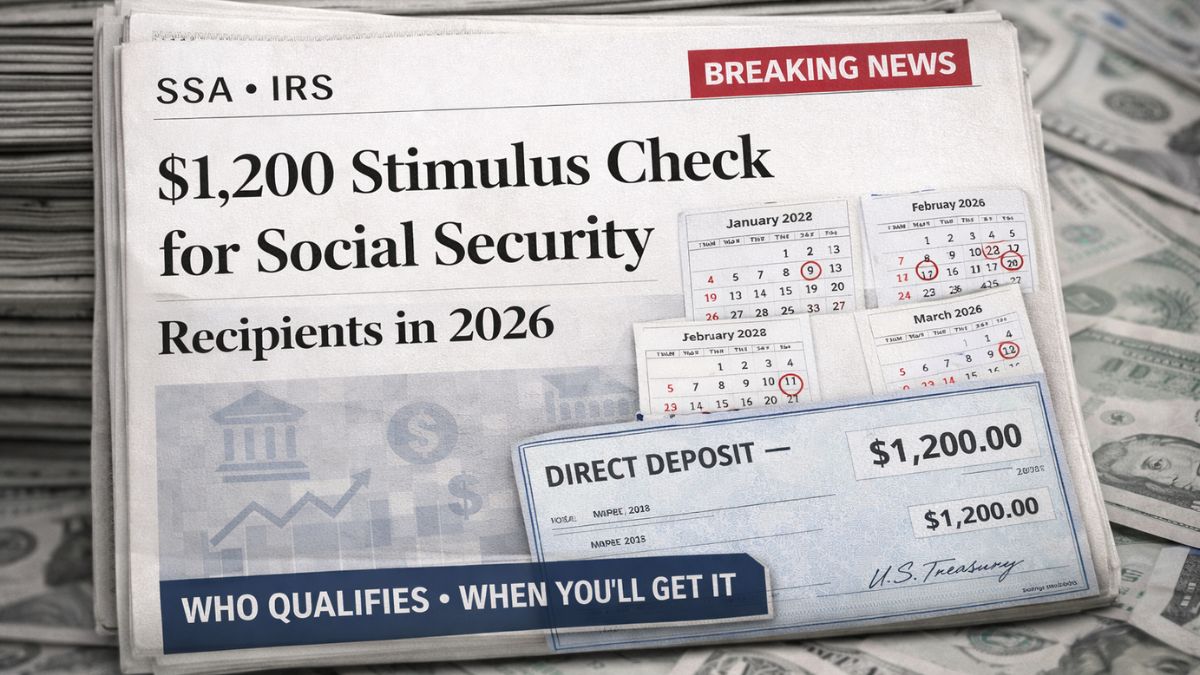
As financial pressures continue to mount for many Americans, particularly those who depend on Social Security benefits, the federal government has announced a significant measure of relief. Set to be implemented in 2026, a $1,200 stimulus check will be issued to Social Security recipients. This initiative is designed to cushion the financial burden on seniors and other eligible individuals who rely on these benefits for their daily living expenses.
The Rationale Behind the Stimulus Check
The decision to distribute a $1,200 stimulus check comes in response to growing concerns about the rising cost of living, which has disproportionately affected older Americans and those with fixed incomes. Social Security benefits have historically provided a stable source of income for millions; however, inflation and increasing healthcare costs have eroded this stability. By introducing this one-time payment, the government aims to provide immediate financial relief and help beneficiaries manage essential expenses. This measure is part of a broader strategy to ensure economic security for vulnerable populations amid an evolving economic landscape.
Eligibility Criteria for Recipients
To qualify for the $1,200 stimulus check, individuals must currently receive Social Security benefits as of March 31, 2026. This includes retirees drawing from Social Security retirement funds, as well as individuals who receive disability benefits through programs such as Supplemental Security Income (SSI) and Social Security Disability Insurance (SSDI). The government has emphasized that there will be no income cap for eligibility, ensuring that all qualifying beneficiaries receive assistance regardless of their total annual income. This approach recognizes that even those with modest savings or pensions often face financial challenges due to unexpected expenses or medical bills.
यह भी पढ़े:
 शिक्षा विभाग ने घटाई गर्मी की स्कूल छुट्टियां, अब इतने दिनों की ही मिलेगी छुट्टी School Holiday
Distribution and Timeline
The distribution process for the stimulus checks is designed to be straightforward and efficient. The payments will be automatically deposited into the bank accounts that recipients currently use for their Social Security deposits. For those who do not have direct deposit arrangements, paper checks will be mailed to their registered addresses. The government anticipates that most beneficiaries will receive their payments by mid-April 2026. Officials have stressed the importance of ensuring timely delivery to maximize the positive impact on recipients’ financial situations.
Impact on Recipients and Broader Economic Implications
This stimulus initiative is expected to have a significant impact on both individual recipients and the broader economy. For individuals relying on Social Security as their primary source of income, an additional $1,200 can cover several months’ worth of groceries or help pay off medical bills and other essential expenses. On a larger scale, this influx of cash is predicted to stimulate local economies across the country as beneficiaries spend their payments on goods and services within their communities. Economists anticipate that this could lead to increased consumer spending in key sectors such as retail and healthcare, potentially bolstering economic growth during a period of uncertainty.
While this one-time payment will provide much-needed relief, experts caution that it should not be viewed as a long-term solution to systemic financial challenges faced by Social Security recipients. To address these issues comprehensively, policymakers need to consider reforms that ensure more sustainable support systems for future generations of retirees and disabled individuals.

Disclaimer: The details provided in this article are based on information available as of March 31, 2026. Policy decisions are subject to change, and readers are encouraged to verify details through official government sources or consult financial advisors for personalized advice regarding their eligibility or unique financial circumstances.